


Working Paper
Orders from Above, Demands from Below: A Systems View of ...
Sep 27th 2026
What does convergence of India's rural women empowerment programs entail?
Read More


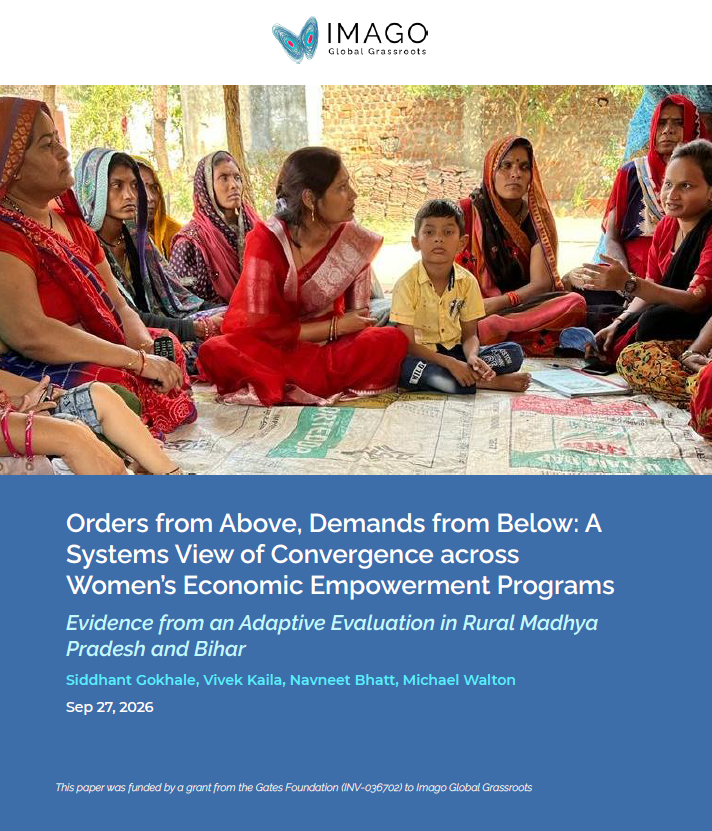
A link to the pdf of the full paper is here. Note this is a working paper.
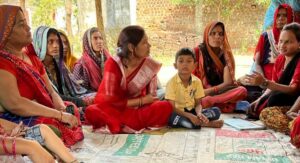
Abstract: Rural deprivation of women in India is a highly complex issue, intersecting with caste, tribal identity, religion, and local village norms. Economic interventions, such as economic growth, education, and direct transfers, while powerful, often neglect the social and cultural systems that sustain exclusion and, as a result, can reinforce structural inequities or risk creating critical dependencies. Social mobilization from below can help address these gaps but rarely achieve the scale relative to the size of the problem. An alternative approach, known as a sandwich strategy, expands local agency and empowerment by integrating such bottom-up mobilization with top-down policies, seeking to change system-wide structures while creating spaces for women’s economic and social engagement. For the expansion of rural women’s agency, which is intrinsically multi-dimensional in nature, this strategy needs to also tackle the challenges of coordination (or “convergence”) across siloed government departments. This paper uses an adaptive evaluation approach to examine convergence initiatives that integrate three “sandwich” strategies within major government programs in Madhya Pradesh and Bihar: Panchayati Raj Institutions (PRIs), involving village-level democratically elected bodies of self-governance, the National Rural Livelihoods Mission, involving women’s Self-Help Groups (SHGs) for economic and social empowerment, and MGNREGA, involving rural employment guarantees for community and individual asset creation. Our findings show major progress at the top, on government directives and rules, and signs of positive movement at the bottom, on women’s mobilization for convergence initiatives. Progress lags in the interface between state and society. We see this as a consequence of many factors, including local capture in PRI systems, overly rigid, target-driven structures of government programs, and overburdened and under-resourced state actors, especially the “community resource persons”—key “doubly embedded” intermediaries caught between community demands and state implementation. This paper’s contribution to existing literature is fourfold: (1) offering a unique case combining convergence and sandwich strategies at massive scale; (2) analyzing women’s agency in its political and social dimensions alongside economic outcomes; (3) tracing a system through three years of scaling to identify where momentum builds and bottlenecks persist; and (4) advancing the techniques and practice of adaptive evaluation for complex system change, including systems diagnostics and process tracing using a range of mixed-methods.
———————————————————————————————————————————————–
This paper was funded by an evaluation grant from the Gates Foundation (INV-036702) to Imago Global Grassroots. Special thanks to the Transform Rural India Foundation and Project Concern International-India for their work. Sambodhi for their collaboration on the quantitative surveys and analysis, and the Gates Foundation for financial support and guidance. We also thank officials of PRI, SRLM, and MGNREGA in MP and Bihar for their time and insights, and community members and leaders of women’s SHGs, VOs and CLFs for their warm welcome and generosity in sharing their experiences.


Working Paper
Sep 27th 2026
What does convergence of India's rural women empowerment programs entail?
Read More
Working Paper
Sep 27th 2026
Can Women's Enterprise Support Systems help women's collective enterprises?
Read More
Brief
May 7th 2026
A friendly and practical introduction to Adaptive Evaluation
Read More
