

Annual Reports
2025 Annual Report
Aug 14th 2026
To read the 2025 Annual Report, click here Para ler o nosso Relatório Anual de 202...
Read More



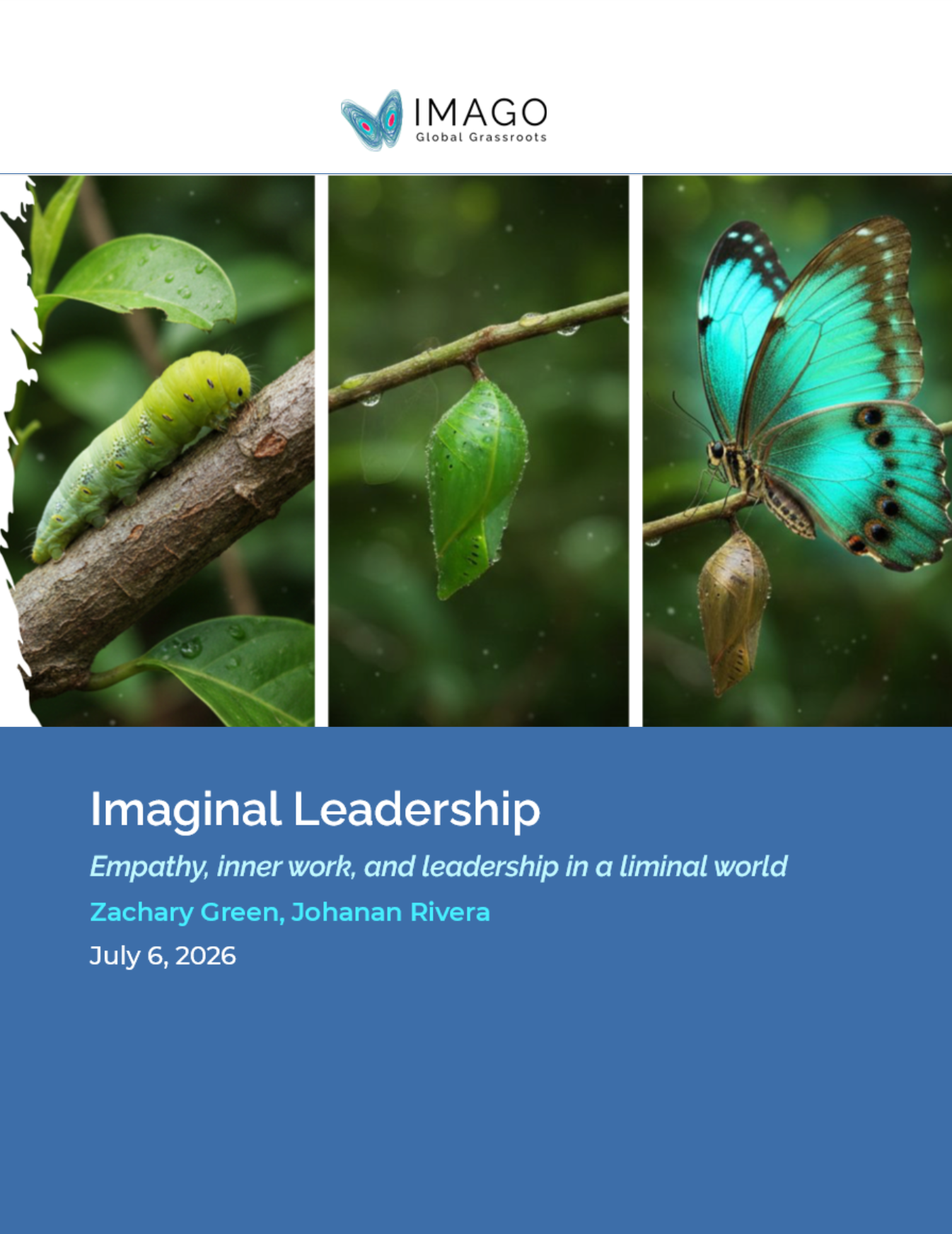
A link to the the full paper is here.
This paper develops the theoretical foundations of Imaginal Leadership, a framework for leading through periods of deep uncertainty and change. It explores the biology of metamorphosis, the nature of liminal conditions, the limitations of conventional leadership frameworks, and the role of empathy in navigating transformation. An accompanying guide, Imaginal Leadership in Practice: A Field Guide for Threshold Moments, puts this theory into practice, and is also available in our publications page.
At its heart is a quiet reversal of how we usually think about leading through change. A caterpillar does not simply harden into a butterfly; it dissolves almost entirely, held together just long enough for a new form to gather from within. So it is with human systems. When old forms begin to break down and new ones have not yet arrived, the instinct is to restore order, to close the gap as quickly as possible. But that gap, the paper argues, is not a problem to be solved. It is where transformation actually happens. The work of leadership is to hold that space open, to keep a collective connected through the disorientation and loss that real change sets in motion, long enough for something new to take shape. Along the way, it asks us to see empathy not as a soft virtue but as the very glue that keeps people bound to one another when certainty falls away.


Annual Reports
Aug 14th 2026
To read the 2025 Annual Report, click here Para ler o nosso Relatório Anual de 202...
Read More
Annual Reports
Aug 28th 2026
Para leer nuestra Memoria Anual de 2025, haz clic aquí
Read More
Annual Reports
Aug 21st 2026
Para ler o Relatório Anual de 2025, clique aqui
Read More
